Solar Activity
Solar activity has been increasing recently.
February 2023
The photo below shows the solar disk photographed in the early afternoon of February 12, 2023, from my backyard in Colorado, USA.
In this image, five large sunspots (sunspot groups) can be clearly identified.
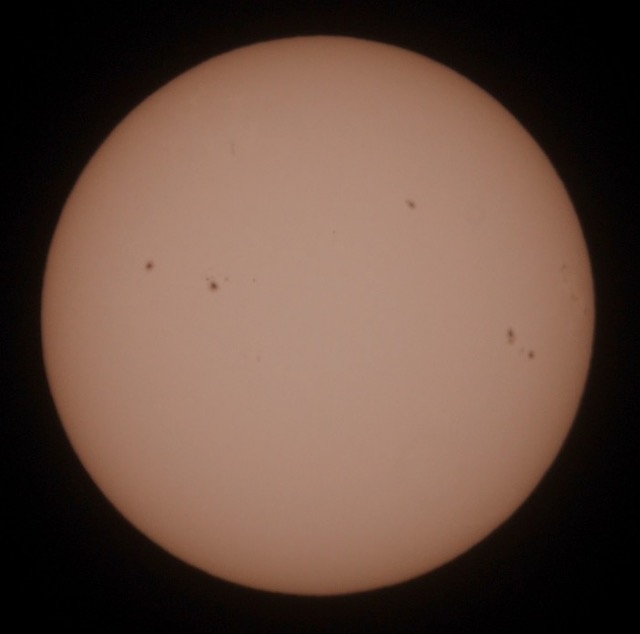
Photo: Solar surface (February 12, 2023)
Camera: Panasonic DMC-GM5 (Micro Four Thirds)
Lens: Tokina SZX 400mm (F8)
ISO: 200
Shutter speed: 1/1000
Filter: ND100000
January 2023
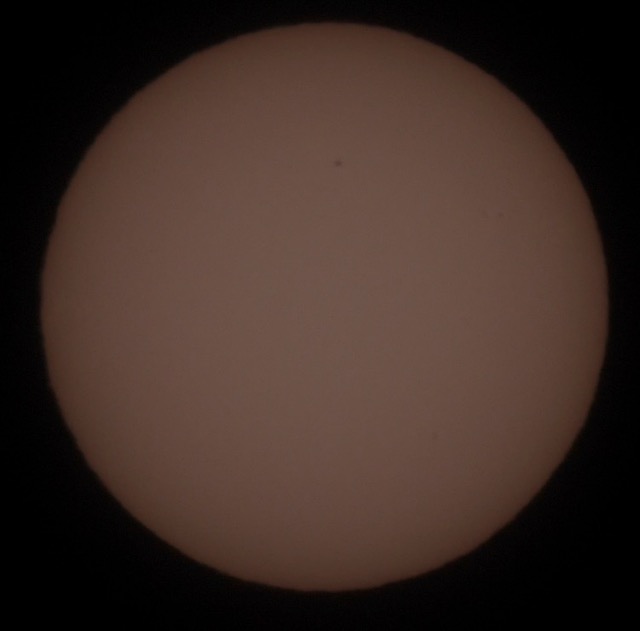
In contrast, a solar image taken on January 23 showed only one sunspot (group) on the solar surface.
(This January image appears to be slightly underexposed.)
Increasing Trend in Sunspots and Sunspot Groups
The Sun follows an approximately 11-year solar activity cycle.
At present, it is in Solar Cycle 25, which is expected to reach its solar maximum around 2025.
As the cycle progresses, it is likely that more sunspots and sunspot groups will be observed in the coming months and years.
Camera and Exposure Information
The first solar image was captured using the following setup:
- Camera: Panasonic DMC-GM5 (Micro Four Thirds)
- Lens: Tokina SZX 400mm (F8)
- ISO: 200
- Shutter speed: 1/1000
- Filter: ND100000
The ND100000 filter is also useful for solar eclipse photography, except during totality.
Amazon Related Product: ICE 77mm ND100000 Filter

NOAA Solar Data and References
Solar Surface Images
Official solar images can be viewed on the National Solar Observatory website.
Below is the solar image from February 12, 2023, corresponding to the date discussed in this article.
(External link: National Solar Observatory)
Solar Disk Sketches
Solar disk sketches are available from the NOAA website.
The sketch shown corresponds to February 12, 2023, from the NOAA Solar Synoptic Map.
(External link: NOAA)
Amazon Related Product
Celestron Solar Binocular
I personally bring these binoculars with me when observing solar eclipses.